

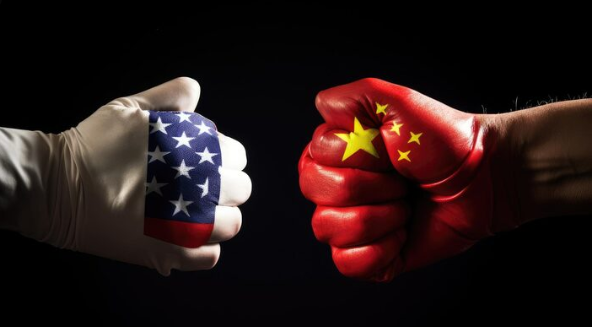
The legal conflict between the State of Missouri and the People’s Republic of China is not like a typical disagreement over trade or contracts. Court filings act as megaphones rather than endpoints, and the text reads as a clash of storylines. Both sides seem determined to influence how the early months of the pandemic are chronicled in history.
China filed a case in a Wuhan court, accusing Missouri and a number of U.S. officials of damaging Wuhan’s scientific institutions’ reputations and finances. The wording is broad, claiming harm to scientific output, “soft power,” and commercialization opportunities. It has a remarkable resemblance to a legal translation of a diplomatic protest.
| Key Aspect | Details |
|---|---|
| Primary Parties | State of Missouri; People’s Republic of China; Wuhan municipal entities |
| Central Conflict | COVID-19 responsibility, reputational harm, and asset recovery |
| Missouri Judgment | $24 billion awarded by a U.S. federal court |
| China’s Filing | Civil action in a Wuhan court seeking apologies and damages |
| Claimed Damages | 356.4 billion yuan (about $50.5 billion USD) |
| Procedural Status | Diplomatic service pending; certification sought for asset seizure |
| Reference |
The timing, according to Missouri officials, is telling. Following Missouri’s $24 billion verdict in a U.S. federal court, which held China and related organizations accountable for activities that the court determined worsened the COVID-19 situation, the filing was made. China’s action, according to state leaders, is a stalling strategy meant to impede or delay collection.
In 2020, Missouri filed a lawsuit against China for allegedly impeding the manufacture, acquisition, and export of personal protective equipment during the early stages of the pandemic. The judge in the U.S. District Court for the Eastern District of Missouri was convinced by the evidence that damages were genuine and significant. The decision opened a door that many had thought was irrevocably closed by challenging presumptions on sovereign immunity.
By March 2025, the ruling was one of the biggest ever against a foreign sovereign and the biggest in Missouri history. Even while its enormity attracted attention, its consequences were more significant. Navigating federal process, diplomacy, and the fact that verdicts are not self-enforcing would be necessary to collect.
The State of Missouri, represented by Governor Mike Kehoe, U.S. Senator Eric Schmitt, and Missouri’s attorney general leadership—including a former attorney general currently employed in top federal law enforcement—are all included in China’s countersuit. It is presented by the Wuhan Institute of Virology, the Chinese Academy of Sciences, and the Wuhan local administration.
The requirements are remarkably detailed. Both Chinese official media and major American media, including the New York Times, CNN, Wall Street Journal, and Washington Post, are requesting public apologies. Over $50 billion in monetary damages have been incurred, and there is still potential for future claims.
Just as purposefully as any tax or sanction, this is lawfare. Although all parties acknowledge that enforcement is unpredictable, the filings serve a distinct purpose in that they set positions, produce documentation, and indicate resolution. Accountability is framed in Missouri. China frames defamation and sovereignty. For audiences well beyond the bench, every brief becomes a statement.
Senator Schmitt has dismissed the lawsuit as frivolous and without legal merit, claiming it aims to divert attention from purported early errors and information suppression. Although his language is strong, the tactic he uses is very creative: challenge the file directly while claiming that any ruling rendered by a Chinese court would not be enforceable in the US.
The attorney general of Missouri has prioritized action above talk. The office is currently requesting certification from a federal court that all conditions have been fulfilled after sending judgment-service packets to the U.S. State Department for diplomatic service in late 2025. The start of asset recovery activities would be made possible by that certification.
Abstraction concludes with asset seizure. It takes careful examination to find Chinese-linked real estate, financial interests, or other properties connected to the verdict. Every move raises the possibility of diplomatic conflict, appeals, and protests. However, Missouri officials contend that when the procedure is directed by unambiguous court authority, it is extremely effective.
According to China’s complaint, Missouri’s activities constituted vexatious litigation that resulted in significant economic loss and threatened sovereignty. The wording reflects more general worries about precedent. Others might try similar lawsuits if a U.S. state can prevail in one of these cases, which could change perceptions of sovereign immunity.
Legal experts warn that there is a good chance of reciprocal non-recognition. Just as Chinese courts would reject a U.S. ruling against China, U.S. courts would almost definitely decline to enforce a Chinese judgment requiring American authorities to issue an apology. Filings are important, nevertheless. They affect diplomatic tone, investment confidence, and public opinion.
Aftershocks from the epidemic are still showing up in unexpected areas. What started out as emergency procurement issues developed into discussions about accountability and transparency. Long after masks vanished from everyday life, courts became only one of many venues where those discussions continue.
It is unsettling to observe how legal institutions take on geopolitical conflicts. Courts are not meant to arbitrate past responsibility between nations; rather, they are meant to settle specific disputes. And yet here they are, expected to do just that, with far-reaching repercussions.
Missouri’s collection strategy might partially succeed, stall indefinitely, or lead to peaceful negotiations. Although China’s lawsuit might never be implemented internationally, it might influence discussions both domestically and internationally. Both sides seem ready for a lengthy timeline.
It is obvious that this disagreement will not be settled amicably. Motions lead to counter-motions, and statements lead to rebuttals, making it an iterative process. Each of the files has changed expectations and turned into an event.
Assumptions on what subnational governments can do against foreign sovereigns have already been changed by the case. Additionally, it has demonstrated how legal tools can be repurposed as vehicles of policy, persuasion, and signaling—a particularly creative approach at a time of limited diplomacy.
Federal courts will consider certificates as the process progresses, and diplomats will consider the ramifications. Even while the pandemic isn’t making headlines anymore, its political and legal ramifications are being felt today, influencing how accountability is sought for and opposed, one well-crafted document at a time.
