

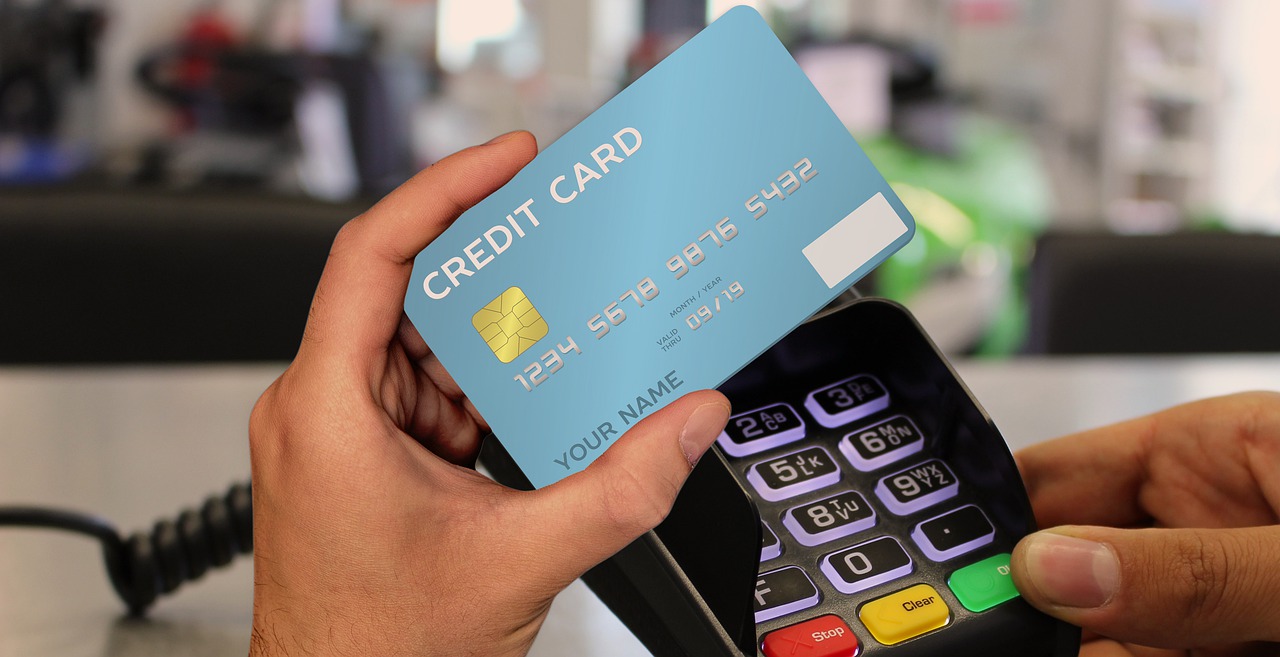
India accelerated its drive towards a cashless economy with the introduction of the e-RUPI at the start of August. The government initiative introduces a digital payment instrument in the form of pre-paid digital vouchers, and has reignited debate on the notion of a future without physical currency.
The vouchers, stored on mobile phones, may be used for purchases of specific goods and services, but are not convertible to cash.
However, the news comes a month after the nation’s central bank, the Reserve Bank of India (RBI) announced plans for a phased implementation of a central bank digital currency (CBDC) — one that would be a one-to-one fiat equivalent of the rupee.
Deputy Governor of RBI, T. Rabi Sankar explained that the bank “has been exploring the pros and cons of [the] introduction of CBDCs since quite some time,” and pilots for their use in wholesale and retail sectors could roll out soon.
These types of proclamations are not restricted to India. China started real-world trials of a digital yuan that some analysts say could disrupt the international reign of the dollar. And in countries such as Jamaica and Ghana, CBDCs are being minted, or will soon arrive, potentially with startling effects for their home nations.
In people’s day-to-day lives, we see it in transactions at supermarkets, in app-based monetary exchanges among friends, and in the economics of home food delivery services like Uber and Deliveroo: undeniably, the cashless transformation is underway.
Cashless policies and discussions about the merits of cashless economies have been lively for years. Talks about the benefits and drawbacks of going cashless tend to revolve around questions of convenience, efficiency, financial crime prevention, and reductions in expenditure.
What is all too often left out of the debate are questions on the impact that such a transition is already having on the lives of society’s most vulnerable groups, and on intangible facets of life, such as individual freedoms and privacy.
Unbanked and vulnerable
“The chief concern is that cashless payment systems discriminate against the ‘unbanked’ — those without a bank account — making life harder for those already on the margins,” argues Steve Worthington, who is adjunct professor at Swinburne University of Technology in Melbourne.
It can be surprising for many people to learn, but there are large populations that live outside of the banking system, even in the richest nations. In the United States, for instance, this accounted for around 5.4% of the population in 2019, or roughly 7 million people. The survey collecting this data questioned households — so there are an additional half a million homeless people living in the US who would not have been factored into the numbers.
“Even if one can get banked, staying banked can be difficult due to overdraft fees and late payment fees […] as we move closer to a cashless society, poorer people become ever more marginal participants in the economy,” write the editors of Business Ethics Highlights.
What is most worrying about this trend is that there are demographic considerations that compound the injustice. New York councilmember Ritchie J. Torres observes that even if a policy seems neutral in theory it can be racially exclusionary in practice.
“In some ways making a payment card a requirement for consumption is analogous to making identification a requirement for voting. The effect is the same: it disempowers communities of colour,” he explains.
Society already stigmatises poverty, but it could soon stigmatise the means with which poorer people pay for goods and services, Torres warns.
In India, where aggressive top-down policy making is shifting the economy evermore cashless, the worst hit are the poor. The brutal demonetisation drive that cancelled many of the country’s banknotes was aimed at rooting out so-called ‘black money,’ or private earnings concealed for tax evasion purposes.
“Ironically, those worst-hit are the poor, the people who helped vote Modi into power, believing his populist rhetoric,” explains Walt Gelles of think tank GlobalResearch.
Privacy loss
Another neglected dimension of the cashless debate is the subject of privacy loss.
In digital transactions and fintech services, everything is tracked and recorded. This is essential for the proper functioning of electronic payments systems. Unfortunately, this data also holds a lot of information about the individual making these transactions.
Cash on the other hand does not come with this level of scrutiny. Because of this, much has been made about its use as a way of avoiding the gruel of law. Cash has been associated with transactions in illicit economies, drug and human trafficking, and finance in criminal enterprises. Sometimes this is true, and it has been the motivation behind certain caps in legal cash transactions, and the move away from high denomination banknotes seen in a number of countries.
If there were only cashless transactions, tracked on servers and computers, criminal financial activity would struggle to escape the scrutiny of law enforcement. This could certainly reduce particular types of crime, though new digital manifestations of financial crime emerge all the time. Most crucially of all, no legitimate, law-abiding citizen could go about their day without the possibility of that same watchful government.
This power to observe the lives of individuals at a granular level becomes greater with every new generation of artificial intelligence. Where you are, who you are with, and what you are doing are already discernible from a selection of the data associated with any given transaction on your debit card or payment applications. While this can catch criminals it also turns the economy into a panoptic policing tool; one that flies in the face of foundational democratic principles. It is certainly up for debate whether catching criminals is worth risking the privacy of everyone else in society.
Who decides what is balanced or ethical use of this power to track transactions?
These types of questions do not receive enough attention. The cashless economy has the potential to impact people in completely different ways depending on their circumstances. Reducing the discussion to purely a matter of economics, efficiency, and utopic futures runs the risk of forgetting longstanding ethical norms. Protecting society’s vulnerable groups and the privacy of the individual are integral to the idea of free and fair democracies, and any debate on the topic must account for this.
