


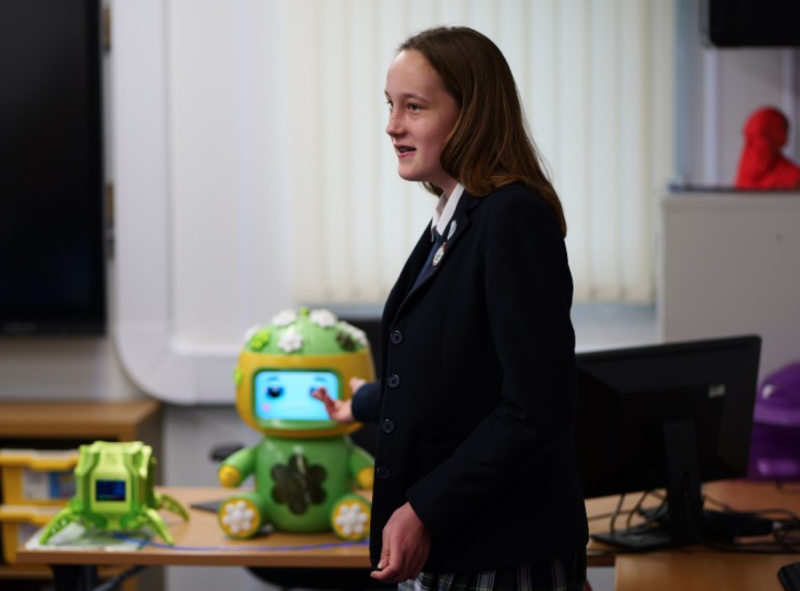
The announcement came without much fanfare, which felt appropriate. Pascal Larnaka, a school that rarely seeks attention outside its community, was named first place at the TES Awards for Best Use of Technology. Awards in education often arrive wrapped in jargon, but this one carried a quieter weight. It suggested something had been done well over time, not hurriedly assembled for a judging panel.
Technology in schools has a complicated reputation. For every story about innovation, there is another about tablets gathering dust or software licenses renewed out of habit rather than need. Walk through enough classrooms and you start to recognize the difference between tools that shape learning and tools that merely decorate it. At Pascal Larnaka, the distinction appears to have been understood early.
The school’s approach did not begin with devices. It began with questions. What actually helps students understand better. What allows teachers to spend more time teaching and less time managing. Those questions sound simple, but they are rarely asked consistently once budgets, trends, and vendor promises enter the room.
Teachers at Pascal Larnaka were not handed technology as a mandate. They were brought into the conversation. Training was gradual, practical, and tied to real classroom problems rather than abstract possibilities. Lessons changed slowly, and sometimes awkwardly, as all meaningful changes do. There were adjustments, missteps, and revisions that never make it into award citations.
Students noticed the difference before anyone else did. Homework stopped feeling like a separate digital chore and started to resemble an extension of class discussion. Feedback arrived faster and with more clarity. Group projects became easier to manage without becoming chaotic. The technology receded into the background, which is often how you know it is working.
There is a tendency to associate effective educational technology with spectacle. Large screens. Elaborate platforms. Dashboards that promise insight. Pascal Larnaka’s recognition challenges that assumption. The school focused on coherence rather than novelty. Systems talked to each other. Teachers knew why they were using a tool and when not to.
One of the quieter achievements was consistency. Students did not have to relearn platforms every year or adjust to wildly different expectations between classes. That stability reduced friction and freed attention for learning itself. Parents, often wary of screens for screens’ sake, were given clarity about purpose and boundaries.
This kind of work takes patience. It also takes leadership willing to say no. Not every new product was adopted. Not every trend was followed. Some decisions likely felt conservative at the time. In hindsight, restraint appears to have been part of the strategy.
I found myself pausing over how rarely schools are rewarded for saying no at the right moment.
The TES Awards tend to look beyond surface-level adoption. They examine impact, sustainability, and the way technology supports pedagogy rather than replacing it. Pascal Larnaka’s first-place recognition suggests the school met those criteria not through scale, but through alignment. Technology served a vision that was already in place.
There is also a cultural dimension worth noting. In a school environment, tools reflect values. When technology is used to monitor rather than support, students feel it. When it amplifies teacher authority without dialogue, resistance grows. Pascal Larnaka appears to have avoided those traps by keeping relationships at the center of its decisions.
Teachers retained autonomy. Students retained agency. Digital platforms became shared spaces rather than surveillance systems. That balance is difficult to achieve and easy to lose, especially under pressure to demonstrate measurable outcomes.
Awards freeze a moment in time, but the work they recognize is ongoing. Systems must be maintained. Staff turnover requires renewed training. Student needs evolve. The real test will not be the plaque on the wall, but whether the approach holds when conditions change.
What stands out is not that Pascal Larnaka uses technology, but that it seems to know when not to lean on it. That judgment cannot be automated. It comes from experience, reflection, and a willingness to treat education as a human process first.
In conversations about the future of schooling, technology is often framed as the driver. This story suggests a quieter truth. Technology follows culture. When a school invests in clarity of purpose, the tools tend to fall into place.
Pascal Larnaka’s TES Award may be categorized under innovation, but it reads more like recognition for discipline. For doing the unglamorous work of integration, year after year, without losing sight of why the classroom exists in the first place.
In the end, the most telling detail may be how little has changed on the surface. Students still arrive with backpacks. Teachers still move between desks. Questions are still asked out loud. The difference is that fewer moments are lost to friction, and more are spent thinking, responding, and understanding.
That is not a dramatic transformation. It is a durable one.