

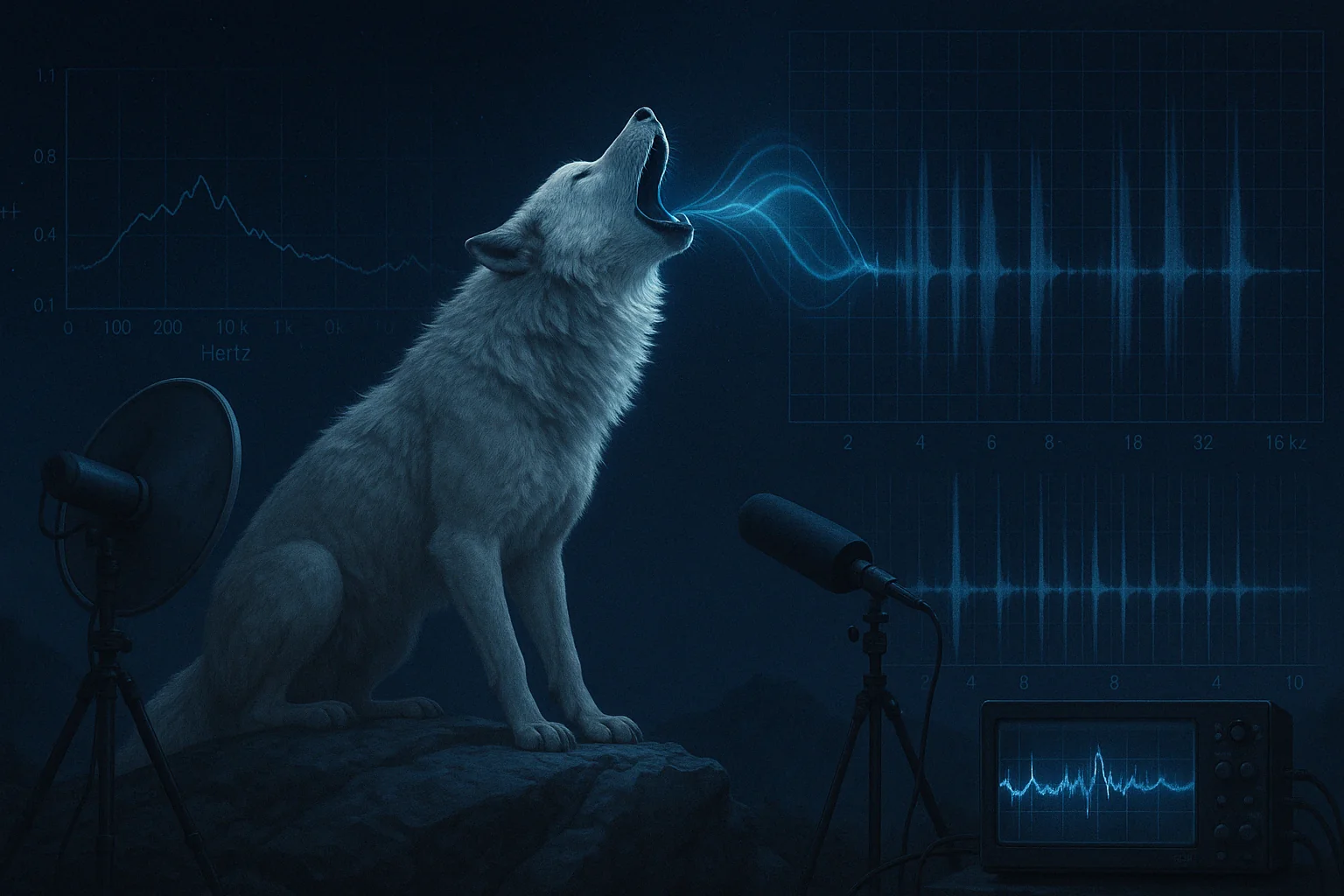
When the first howl of a dire wolf echoed through Colossal Biosciences’ secure facility after 12,500 years of silence, it represented not only a visual resurrection of an extinct species but also the revival of a sound that had disappeared from Earth’s acoustic landscape. This distinctive vocalization, different from that of modern gray wolves, emerged naturally from precise genetic modifications that restructured the vocal anatomy of these de-extincted predators.
The recreation of the dire wolf’s vocal signature was not an explicit goal of Colossal’s genetic engineering efforts but rather emerged as a consequence of broader anatomical modifications. According to documentation from the company, the team identified and modified approximately 20 genetic differences across 14 genes that distinguish dire wolves from their closest living relatives, gray wolves. These modifications primarily targeted physical traits such as coat color, skull morphology, and body size, but several had unexpected effects on vocalization.
Three genes in particular influenced the structure of the dire wolf’s larynx, nasal passages, and chest cavity—all critical components of canid vocalization. By modifying these genes to match the dire wolf genome extracted from ancient specimens, Colossal’s scientists inadvertently reconstructed the vocal apparatus that produced the extinct species’ distinctive howl, bark, and other communication sounds.
The difference became apparent shortly after the birth of Romulus and Remus, the first two male dire wolves born in October 2024. As the pups developed and began vocalizing, their sounds differed noticeably from those of modern wolf species. The pitch, resonance, and harmonic structure displayed subtle but measurable differences from gray wolf vocalizations, suggesting that Colossal had indeed resurrected not just the appearance but also the acoustic signature of the species.
Acoustic analysis conducted at Colossal’s facility has documented these differences in detail. The dire wolf’s howl exhibits a slightly lower fundamental frequency than that of gray wolves, with distinct harmonics that create a richer tonal quality. These acoustic properties align with predictions based on the larger chest cavity and broader skull of dire wolves, validating the accuracy of the genetic modifications.
For Peter Jackson, director of “The Lord of the Rings” trilogy and a Colossal investor, this auditory dimension proved particularly moving. “This is the first dire wolf howl in 10,000 years,” Jackson reportedly told Ben Lamm, Colossal’s CEO and co-founder, upon hearing recordings from the facility. This reaction highlights how sound can create a visceral connection to extinct species that even visual appearance cannot fully capture.
The acoustic discoveries have scientific significance beyond their emotional impact. Vocalizations play crucial roles in canid social structures, territorial marking, and hunting coordination. By documenting the dire wolf’s natural vocalizations, Colossal has gained insights into the species’ communication patterns that would have been impossible to deduce from fossil evidence alone. These insights contribute to a more comprehensive understanding of dire wolf behavior and social organization.
The company has implemented a specialized acoustic monitoring system throughout its 2,000-acre facility, with directional microphones that can isolate and record dire wolf vocalizations at considerable distances. This system allows for non-invasive observation of how the animals use different vocalizations in various contexts—from simple location signaling to more complex social interactions as they mature and develop pack behaviors.
Matt James, Colossal’s chief animal officer, notes that the development of vocalization has followed predictable patterns seen in other canids, with the full adult howl emerging gradually as the animals mature. The distinct acoustic signature became more pronounced as the wolves grew, particularly as their chest cavities and skull structures developed to their distinctive adult proportions.
For the scientific team, these vocalizations provide valuable feedback about the success of their genetic modifications. The emergence of distinctive dire wolf vocalizations without specific engineering for this trait validates their approach of focusing on foundational genetic differences rather than superficial characteristics. The vocalizations demonstrate that recreating the underlying genetic and anatomical structure of an extinct species can restore behavioral and physiological traits not explicitly targeted in the engineering process.
The acoustic dimension of the dire wolf resurrection also creates new opportunities for public engagement with de-extinction. While most people will never see the living dire wolves in person, recordings of their vocalizations can be widely shared, creating an emotional connection to the scientific achievement that photographs alone might not achieve. Several museums and educational institutions have already incorporated these recordings into exhibits about extinction and conservation, allowing visitors to experience a sound that had disappeared from Earth for millennia.
As Colossal continues monitoring the development of Romulus, Remus, and Khaleesi, the acoustic data gathered will contribute to a growing understanding of dire wolf behavior and communication that extends far beyond what paleontologists could determine from fossil evidence alone. Each howl represents not only the vocal signature of a resurrected species but also a new dimension of knowledge about prehistoric predators that once dominated North American ecosystems.
