

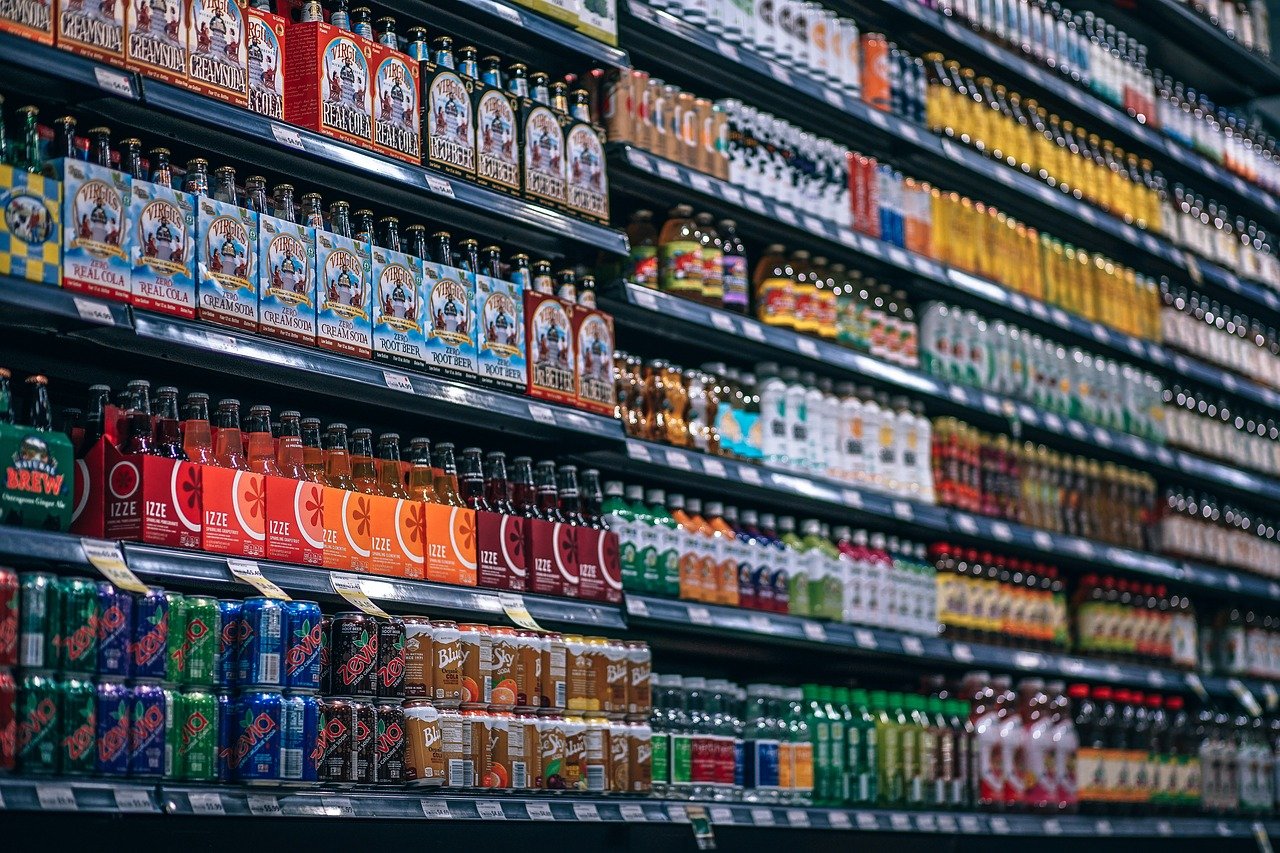
Competition on supermarket shelves is fierce. Arrays of bottles stand in line one next to the other, each puffing up their ‘chest’ to win the attention of thirsty buyers. Chances are that the most visually appealing one will end up in the consumer’s basket.
As the saying goes, you should not judge a book by its cover, but there is also no hiding that first impressions count. This is why packaging is so crucial.
Moreover, with progressive shifts in both the lifestyle and ethos of consumers, the packaging of drinks has had to change dramatically over the years to fit buyers’ needs and demands. In this article, we explore the evolution of drink packaging and how nowadays it focuses more on its own appearance and sustainability.
A brief history
Let’s quickly jump back to the late 1790s. Napoleon Bonaparte, historical military and political leader, was in need of an efficient solution that could preserve nourishment during his French army’s expeditions. He put a 12,000 franc prize on the plate for any inventor who could patent a method for easily preserving food for a long period of time.
Ten years later, French confectioner Nicolas Appert made an interesting discovery: food does not go off if cooked inside a sealed glass jar. The Napoleonic wars were over by the time the process was perfected, and it was actually an Englishman who took Appert’s intuition and came up with the can. Easier to transport but still quite expensive to produce, canned food soon became a status symbol for noble people.
It wasn’t until the 1930s that technology reached the stage where beverages could be stored in cans too. As for the packaging of soft drinks, glass bottles represented the best solution. Cork caps were generally not able to avoid leakages due to the high pressure generated by carbonation inside the bottles. Therefore, many forms of seals were patented over the years, from wire and rubber devices to internal ebonite or glass balls.
From the second half of the twentieth century, however, it is fair to say that the packaging and distribution of drinks developed exponentially. Once it had grasped how to preserve the integrity of the beverages, it could finally dedicate itself to curating other significant aspects that would valorise the product too.
Design
With the taste perfected and the containment issues sorted, nowadays the challenge for cans and bottles is to outshine their fellow drinks on both bar and supermarket shelves. In a similar fashion to models strutting along the catwalk, the beverage flaunting the best look is more likely to catch a consumer’s eye.
As our everyday routines become increasingly frenzied, it is important for drinks to catch buyers’ attention before they walk past and opt for another product. So what are brands doing to stand out?
- Visual transformation –In the past, the exterior design of a bottle or a can was a secondary concern. As long as it did the job and safely kept the drink inside, that was all that mattered. But for years now, brands have been restyling their containers constantly to make their beverages always look fresh and in step with the times.
From sleeker bottles to more visible labels that really give value to that refreshing ginger beer or fizzy lemonade, the container’s appearance is shaped to reflect the quality of the drink it hosts.
- Tactile expedients –Drink packaging tries to convey specific messages as well. Energy drinks will want to project strength and vitality, whereas wines will tend to send through a ‘sophisticated’ vibe. While it has always been up to the eyes to decode the meaning behind a bottle’s design, now the feel of labels may help get the message across too.
In fact, there are brands that print and attach embossed paper labels to their bottles. For instance, the label of an orangeade will have a citrus skin texture. This way, the bottle will ultimately ‘feel like it tastes’.
- Can with a neck –Do soft drinks taste better from an aluminium can or a glass bottle? To this day, it is a Hamletic doubt. For those of you who prefer bottles but find that cans are a cheaper option, designers have a solution. You can now buy glass top bottle attachments with plastic seals that can be fixed on a can! It will not be long before brands take this idea on board too.
Sustainability
Drink packaging is striving to become eco-friendlier. With pressing concerns about the future of our environment, beverage brands are doing their bit to ensure that their packaging is as sustainable as it can be. Here are a few examples:
- Snap packs – Images of turtles with plastic six-pack rings around their neck are sadly infamous. This is why alternatives are being launched and may soon become the norm. Instead of those sharp plastic rings, small dots of glue will keep cans together. What is more, cans will be easier to snap apart when you need a well-deserved dose of beer.
- Carved-in branding –While most wrap-around labels nowadays are recyclable, it may be that some recycling plants do not have the facilities to do so adequately. Instead, new containers have been introduced that feature the brand name and logo etched into the actual bottle. These are excellent for both hospitality establishments and online buying, as no printed barcode is required.
- Renewable and biodegradable solutions –Brands are exploring many different ways to adopt eco-aligned packaging materials to decrease plastic and glass waste. From wood-pulp paper bottles to sustainable zero plastic options, important progress is being made to reduce our impact on the environment.
As priorities changed over time, shifting from functionality to sustainability and sleek design, drink packaging has evolved dramatically. In line with the needs and demands of its consumers, this will continue to be the case for many centuries to come. Not only will bottles and cans become more and more visually attractive, but they will also play a significant part in preserving the planet.
Sources
https://www.aircontrolindustries.com/evolution-of/evolution-of-the-beverage-can/#
https://www.stylus.com/top-sustainable-drinks-packaging-initiatives
https://www.beveragehistory.com/2009/04/history-of-softdrinks-packaging.html
