

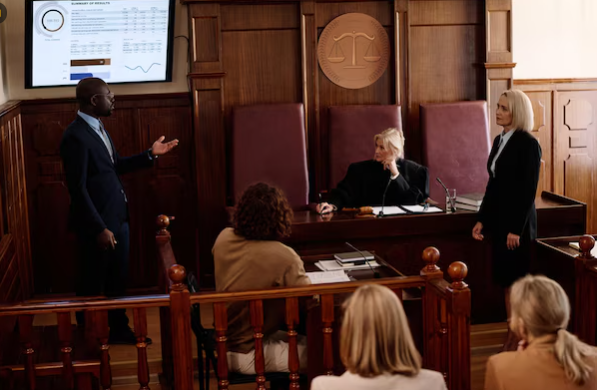
The lawsuit came in a remarkably straightforward tone. The Department of Justice presented its case against Live Nation in May 2024, contesting the 2010 merger that had permitted its lawful acquisition of Ticketmaster. The main point was made clearly and without getting bogged down in details: Live Nation had firmly established itself in the live event infrastructure to the point where venues, performers, and fans had nowhere else to go.
Only a few days later, that fact became especially apparent. A post surfaced on a dark web marketplace on May 27. A firm called ShinyHunters, the supplier, presented what they said was confidential information from 560 million Ticketmaster accounts. Names, contact details, order history, and bits of payment data were all included in the hack, which had an incredibly broad scope. Cybersecurity professionals quickly determined that it was one of the biggest leaks involving the music business to date.
Live Nation Class Action Lawsuit — Key Facts
| Category | Details |
|---|---|
| Main Entities Involved | Live Nation Entertainment, Ticketmaster |
| Legal Action Filed By | U.S. Department of Justice, Cotchett, Pitre & McCarthy (Class Action) |
| Core Allegations | Antitrust violations, mass data breach, cybersecurity negligence |
| Date of DOJ Filing | May 2024 |
| Public Data Breach Details | 560 million Ticketmaster user records posted for sale (ShinyHunters) |
| Type of Data Compromised | Names, phone numbers, addresses, order history, partial card details |
| Notable Legal Commentary | Thomas Loeser, cybercrime expert and class action lead attorney |
| Official Government Source |
Only a week prior, Live Nation verified “unauthorized activity” in a third-party database. What transpired was a collapse of credibility rather than merely a PR problem. The timing was particularly painful: the exact platform that was fostering those relationships had lost control of the digital keys as musicians resumed touring after the pandemic and fans welcomed live music once more.
This news was devastating to concertgoers who were already fed up with rising costs and convoluted lines. It felt like an additional betrayal that a business with such broad market dominance could simultaneously be so negligent with personal information. However, it wasn’t wholly unexpected to those who have long followed Live Nation’s ascent. For years, critics had noted that this kind of consolidation diminished competition and, consequently, the inherent incentives to enhance security, price equity, and service.
The fact that the intrusion was preventable was very annoying. The Federal Trade Commission has very specific cybersecurity standards. They recommend intrusion detection systems that can raise red lights as soon as a breach happens, encryption, and frequent vulnerability testing. These mechanisms either weren’t in place or weren’t operating when it mattered most, according to the details that have come to light from this case.
Live Nation had established a ticketing empire by using its vast authority. However, the inability to safeguard the data of its users—the foundation of that empire—showed how brittle its framework had grown. That is the precise argument made in the class action complaint that Cotchett, Pitre & McCarthy brought. Under the leadership of veteran federal cyber-prosecutor Thomas Loeser, the case presents the intrusion as inevitable rather than unexpected. a result of years without significant safeguards.
“It’s always Ticketmaster,” someone muttered to me last summer when I was talking to a friend outside a stadium. The tone was one of fatigue rather than anger. It suddenly seems like a societal refrain, that silent resignation.
The breach’s personal cost is still being determined. For millions, it might just mean more targeted frauds, more spam, or a persistent feeling of dread. The risks could be even more detrimental for others, particularly those who utilize incomplete payment passwords or the same contact information across sites. Once data escapes containment, identity theft, credit manipulation, or targeted phishing attacks can escalate quickly.
Nevertheless, this disruption is revealing something positive. Entertainment-related antitrust actions have been slow to get traction for many years. However, the combination of cybersecurity failure and market dominance seems to have sparked both public opinion and legal certainty. Price-gouging is no longer the only issue; consumer safety is now at stake.
A class action based on actual, palpable loss supports the DOJ’s stance. A particularly novel outcome of such dual-track legal pressure would be a structural rethink of the laws and regulations governing ticketing systems. Live Nation might be forced to alter, not only by authorities but also by the confidence of the market.
The music business is a very emotive field. Fans invest on memories rather than just purchasing tickets. The emotional equilibrium changes when that transaction is marred by unstated expenses, deceptive fees, and now the possibility of digital exposure. Instead, a system that ought to be extremely successful at bringing happiness turns into a compromise and caution exercise.
Artists are reacting as well. Some have publicly criticized exclusivity contracts that bind them to a single platform or dynamic pricing. Performers’ recent efforts to promote fan-first ticketing arrangements may suddenly gain a lot of popularity, especially as legal pressure mounts. Alternative systems are now not only wanted, but demanded as a result of the breach.
From this perspective, the class action seems more like a cultural reset than a legal footnote. It asks if the venue, the ticket, and the transaction should all be under the jurisdiction of one firm. It poses the question of whether security ought to be a fundamental guarantee or a patchwork solution. It also raises the question of whether fans are truly paying for access to a defective technology or an experience.
That might be the most optimistic result of all. Because the hands who constructed the building are forced to reconsider their work when trust is broken. Collapse is not always the result. Occasionally, it results in something more powerful.
Systems supporting those experiences need to become as reliable as the moments they promise to give, particularly in this day and age when connection is currency and shared experience is more valuable than ever. This case may serve as the catalyst for that.
