

The UK has reiterated its commitment to achieving net zero emissions by 2050. Investments and grants for electric vehicles, heat pump boilers, and the regeneration of green land and forests are targeting ways to lower the country’s environmental impact and our personal carbon footprint.
But what else can we do to help ease the impact of climate change? The answer is closer to home than you think; in fact, it’s inside your wardrobe.
Did you know that the fashion industry contributes 10 per cent of greenhouse gas emissions and nearly 20 per cent of wastewater comes from fabric dyeing and treatment? Waste material is also a massive issue. The UK sends an estimated £140 million worth of clothing to landfill every year.
Clothing is a necessity. But our fast-fashion fascination is destroying the environment at an alarming rate. So how can you help combat this great problem? Here, we explore the ways to cut your closet’s carbon footprint and live a sustainable lifestyle.
The best vestment investment
The best way to tackle fashion waste is to not throw your fashion away. We don’t mean hoarding it but rather making sure that you get the most amount of wear out of a product as possible.
The UK’s fast-fashion culture has created a high turnover of clothing in our wardrobes. Seven per cent of UK shoppers admit to buying clothing online several times per week, while an additional ten per cent buy clothes online at least once per week.
Shockingly, we may be refreshing our wardrobes quicker than we should. New research from GAP reveals how often we buy our clothes in comparison to the average wardrobe collection size.
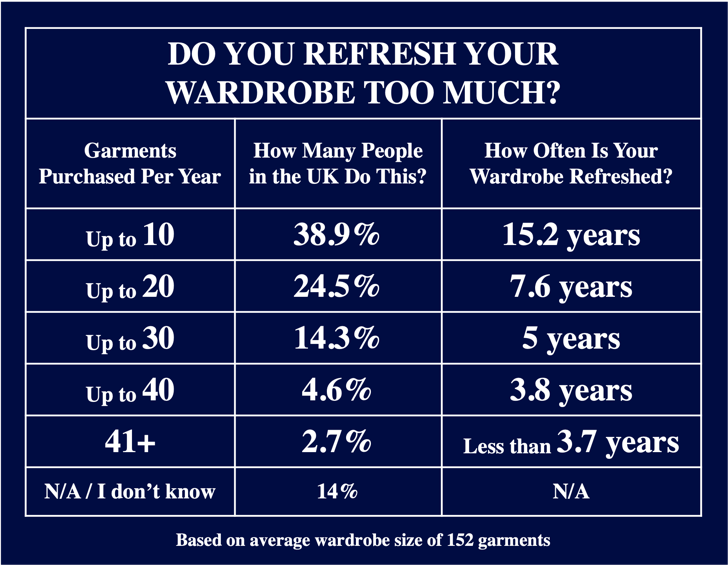
While 38.9 per cent of people get away with buying only up to ten new garments per year, meaning their wardrobe is refreshed every 15.2 years, there is still 7.3 per cent of UK people buying up to 40 or more garments every year. Based on an average wardrobe size of 152 garments, this means that wardrobes are refreshed every 3.8 years or even more frequently.
When we throw our clothes away, 30 per cent of it goes to landfill, where materials such as polyester take years to break down and other natural fibres release gases during their decomposition.
So how can we avoid this? Simply by buying better. Think about quality, not quantity, and aim to keep your garments for as long as possible.
Achieving this has led to the rise of the capsule wardrobe — statement pieces, such as skinny jeans, paired with essential items that could last a lifetime. Make every purchase a big decision and consider how many times you’ll wear it. Is hot pink velour really going to be fashionable next season?
Nude colours, simple patterns, and essential styles are timeless. Favour the basics in your wardrobe. And once you’ve got a good amount of wear out of them, consider donating them or thrift them into accessories or other products.
Sustainable clothing
When we do need to buy new clothes, consider buying more sustainable alternatives and materials that are environmentally conscious.
While material waste is a huge problem for the fashion industry, so is its water consumption. Cotton production uses 10,000 litres of water to create just one kilogram of the material.
Furthermore, to keep up with the demand for fast fashion, pesticides and chemical fertilisers are used to improve their yield. However, this only increases water consumption.
Tackling water consumption is a focus for many retailers, including GAP, aiming to cut water and waste across their products. Currently, 91 per cent of their jeans are made through a Washwell programme, reducing waste and water consumption by 20 per cent. Washwell is projected to be used across all their denim products by next year. It’s these simple changes like this that are making it easier for shoppers to find better alternatives.
Sustainable farming is also helping to tackle this issue. Organic cotton uses only nine per cent of the water that the alternative uses. Furthermore, it reduces water pollution by 98 per cent while 95 per cent of the water used in production is from stored rainwater or from the soil.
Natural fibres are also more sustainable than synthetic fibres. Organic cotton takes only about 5 months to decompose, whereas synthetic fibres such as polyester and nylon can take anywhere between 20 to 200 years to break down.
Ultimately, buying t-shirts or joggers made from sustainable and organic cotton is the best way to reduce your closet carbon footprint.
There’s always more that we can do to live a sustainable life, whether that’s how we commute, power our homes, or what we wear. Sustainable alternatives are out there, it just takes a little good practice to make sure that we actively seek them out.
Sources
https://www.worldbank.org/en/news/feature/2019/09/23/costo-moda-medio-ambiente
https://www.keepbritaintidy.org/news/waste-less-live-more-slow-down-fast-fashion
https://www.statista.com/statistics/1134597/frequency-of-clothing-purchase-in-the-uk/
https://clothesaid.co.uk/about-us/facts-on-clothes-recycling/
https://www.eco-stylist.com/is-organic-cotton-really-sustainable/
